


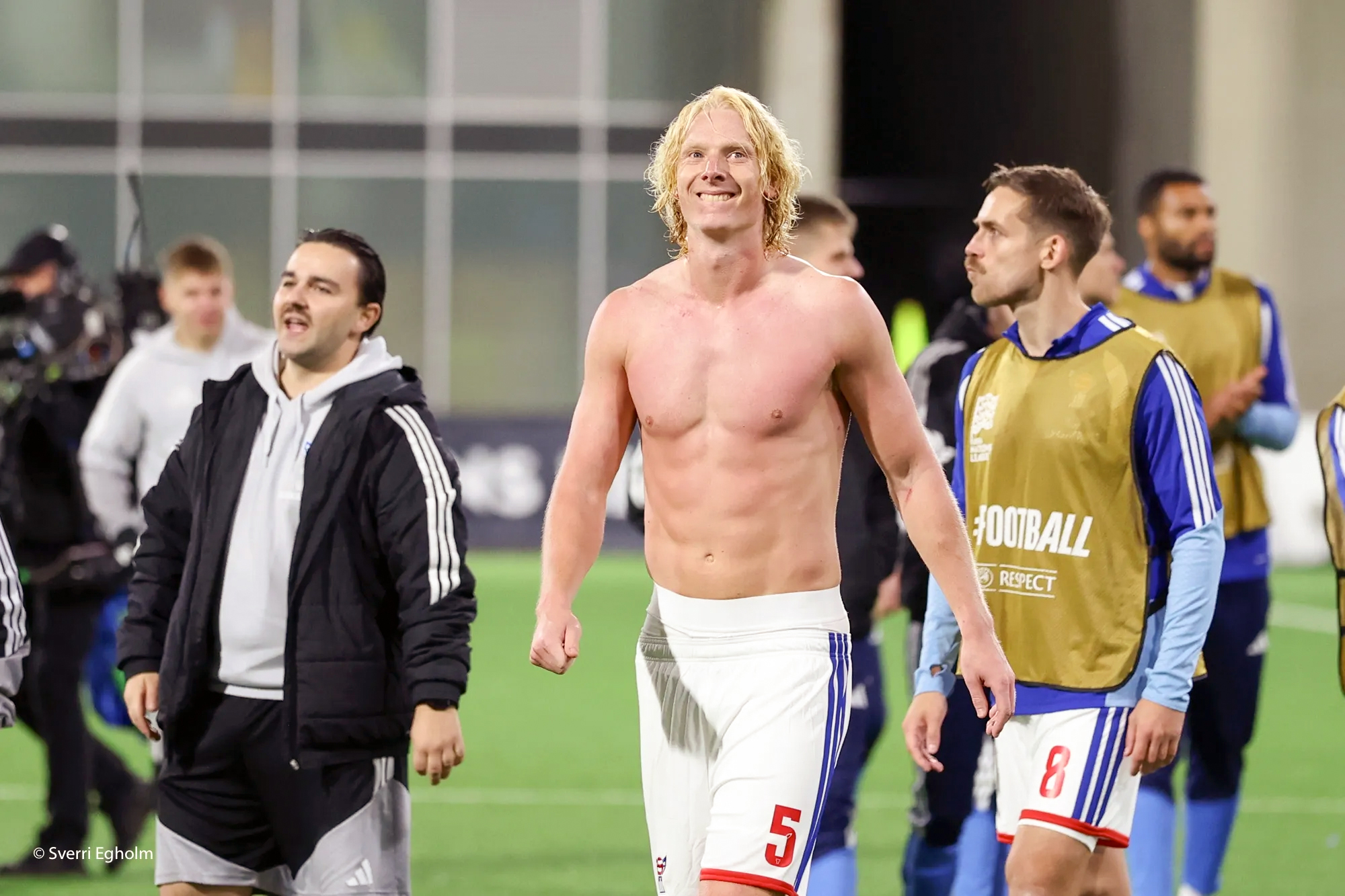
Verona, the city of love, feels a world away from the windswept isolation of the Faroe Islands, where football is carved from resilience rather than glamour. Yet it is here that one of the sport’s most remarkable stories has unfolded.
Faroese centre-back Andrias Edmundsson joined Serie A side Hellas Verona from Polish outfit Wisła Płock in February 2026—a fairly standard transfer on the surface, but the defiant backstory and what it represents for a nation speak to something far greater.
To understand that, you have to look far beyond the Roman walls of fair Verona and head to the North Atlantic, midway between Scotland, Norway and Iceland.
With their dramatic, steep cliffs and otherworldly landscapes, the Faroe Islands feel detached from the modern world in the most ethereal way, where people leave their front doors open and bikes unchained. This tiny, self-governing Danish territory, with a population of just 55,000 and sheep outnumbering people by 20,000, has a rustic spirit that feels both timeless and untouched.
If we are in the horizontal, then the Faroes are truly in the vertical world.
Forged on the pitch
In such remote lands, unity isn’t just valued—it’s a necessity, and nowhere is this more evident than in football, which isn’t just a sport here; it’s a way of life.
Every village, no matter how desolate, has two things: a church and a football pitch. The archipelago has over 5,000 registered football players, nearly 10 percent of the population, with a professional footballer for every 350 males aged 18 to 36.
In fact, in 2017, an algorithm ranked the Faroes as the most over-performing national team in the world, as they topped the list of FIFA ranking points per capita.
“Football means everything to the Faroese people,” Andrias remarks.
Andrias stands out in more ways than one; his towering 6-foot-4 frame, coupled with his distinctive blond locks (which, until recently, were braided pink), makes him hard to miss. Humble and composed in his demeanour when I met him, you wouldn’t guess that he had recently faced AC Milan, going up against the likes of Luka Modrić and Rafael Leão, and earned Verona’s player-of-the-match award.
“It was special to see all the big names, but I think I performed well. Playing against Luka Modrić for the third time is, of course, something special—he is a Ballon d’Or winner.”
He comes from something close to Faroese footballing royalty. His older brother Hákun played for various clubs across the Faroese leagues, while his eldest brother, Jóan Símun, is the nation’s most-capped player of all time, the first Faroese player to play and score in the Bundesliga (with Arminia Bielefeld), and the nation’s first outfield player to feature in one of Europe’s top five leagues. The considerable nine-year age gap between Andrias and Jóan Símun meant he could watch his brother’s career develop long before beginning his own.
“My two brothers have always been my idols and have guided me throughout my career, even though I don’t always listen to them. When I received my first national team call-up, I said in an interview that my goal was to have a better career than Jóan Símun. At that time, I honestly did not believe it was possible, as I was playing in the fifth division in Spain. But I believe I have a real chance now.”
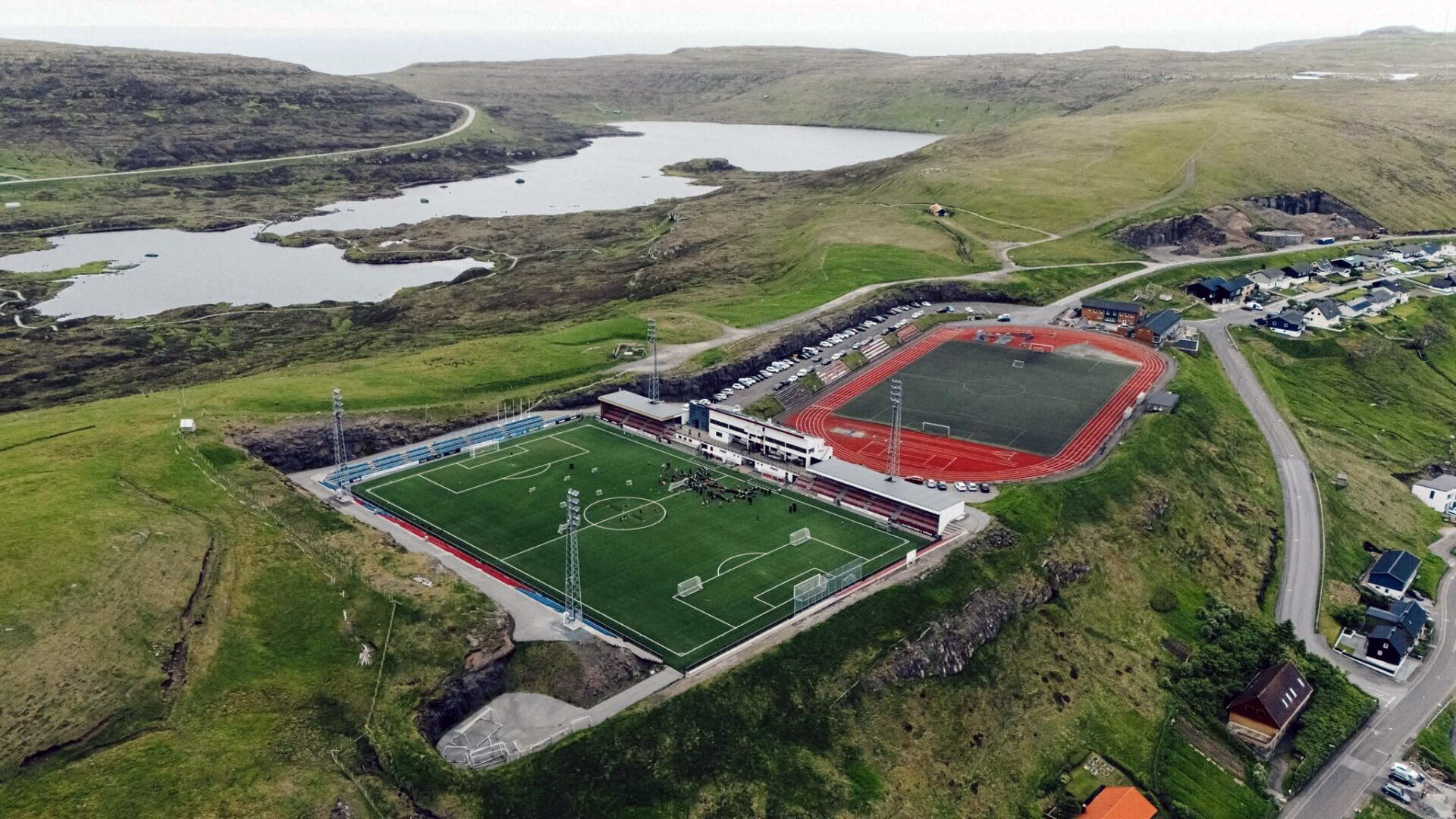
Born and raised in Toftir, a small fishing village with a population of just over 1,000, Andrias grew up in a place particularly exposed to the fierce North Atlantic winds. It is the only area in the Faroes with no mountains above 200 meters. Such elements helped shape his steadfast resilience.
“The climate is challenging, which helps you become tougher as a player and a person.”
“I loved growing up there,” he says. “Having my family and friends around me all the time was very special—my house was only 50 meters from the football pitch as well.”
Heartbreak and lower leagues
Andrias made his debut for his hometown club, B68 Toftir, at the age of 16, and after just 10 first-team appearances, he secured a move to Sunderland. After three seasons in their academy, he was released—a crushing blow for any young hopeful, let alone one in a foreign country.
“I remember it clearly,” he says. “I was at home during Covid when the club called… after the call, I went to my room and cried. It was a very difficult moment.”
A move to Spanish outfit Águilas followed. But after an injury-plagued three-year stint, the footballing dream seemed to be slipping away.
“I barely played for three years due to an ankle injury,” he says. “I was 23 years old, playing in the fifth division on poor artificial pitches, and at that time I honestly thought I might never reach the top level.”
In 2023, he signed a one-year deal with semi-professional Polish third-tier side Chojniczanka Chojnice—a long-shot move that would ultimately transform his career.
“It was a vital decision—the best I have ever made. I was unsure whether to return home and study, which my parents encouraged to do at the time. However, my two brothers advised me to move to the third division in Poland and give football another chance. They felt I had sacrificed too much already to simply give up.”
And the gamble paid off. After an impressive season, second-division Wisła Płock picked him up, and promotion to the top flight followed, with Andrias an ever-present in defence.
Following a stellar first half of the 2025/26 season, with Wisła Płock top of the Ekstraklasa and Andrias playing every minute of every league game, his form caught the eye of various clubs across Europe. But it was Hellas Verona who managed to snap him up on a three-year deal for a reported 2.5 million EUR—a record transfer fee for a Faroese player.
From the Polish third division to Serie A in the space of two and a half years is quite the meteoric rise.
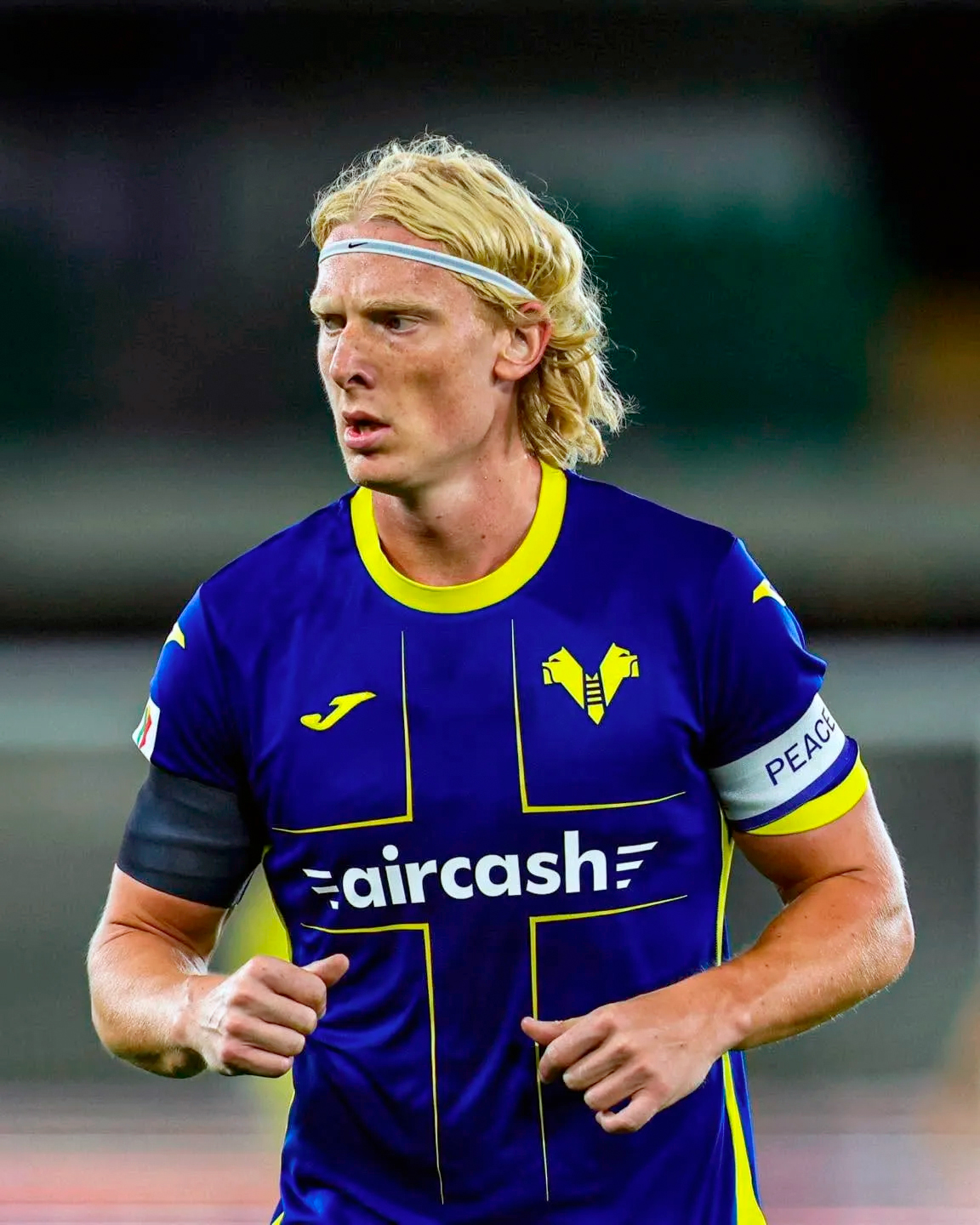
A rare bright spot in a dark season for the Mastiffs, he quickly established himself in Verona’s defense, earning recognition for his performances against some of Italy’s biggest clubs, including Scudetto holders Napoli. His impact was such that he won the club’s fan-voted 2025/26 Player of the Season award, the Cuore Gialloblù, despite joining halfway through the season.
“I don’t think I’ve fully realized the last couple of years yet,” he admits. “But I’m happy to prove that I belong at this level—and I believe I can go further.”
In many ways, Hellas Verona feels like the perfect match for Andrias’s underdog story. They are the only team in Italy from a city that is not a regional capital to have won the top-flight title, having been stunningly crowned champions in 1984–85. It is a fitting marriage of defiance.
“It is going well,” he says of his start. “My teammates and all the staff have taken excellent care of me, and I really like the city.”
Hellas Verona have certainly seen better days. Their relegation from Serie A was confirmed at the end of the 2025/26 season, and the deteriorating state of the aging Stadio Marcantonio Bentegodi mirrors the mood of the club. A stadium built to accommodate nearly 40,000 spectators—enough to hold around 74 percent of the Faroe Islands’ population—its sparsely populated stands have become a poignant reminder of the club’s fall from grace.
Now competing in Serie B, Verona are seeking a return to the top flight, with Andrias entrusted with the vice- captaincy for the 2026/27 campaign. It is another remarkable milestone in a career that, just a few years earlier, seemed destined to stall in the lower reaches of European football.
Weight of a nation
But to the people of the Faroes, Andrias’s presence at such a historic club holds significance far beyond the pitch.
In such a tightly knit society, where connections rarely stretch beyond one or two degrees of separation, when a Faroese person succeeds on the world stage, that success is never theirs alone—it belongs to the entire nation.
“I am representing something bigger than just football. I believe it is important that I perform well so that younger Faroese players can believe in a similar path and follow their dreams. It is vital that players from smaller nations are represented in the top leagues in Europe.”
Representation on the global stage is all too rare for the Faroese people, whose homeland is more often associated internationally with whale hunting than footballing achievement. So to have one of their own flourish in one of Europe’s most prestigious leagues is a profound experience for an island nation so often overlooked by the wider world.
In a place where community and courage lie at the heart of identity, his presence carries a far more poignant weight. He is not just representing himself, but an entire people.
“The support back home has been incredible. I receive many messages from people saying I make the country proud. My parents also tell me that wherever they go, people always wish me well and follow my matches.”
Andrias’s trajectory has coincided with the national team’s own rise. In their latest World Cup qualifying campaign, the Faroe Islands recorded 12 points—their highest-ever haul in a qualifying group—with victories over Gibraltar, Montenegro and Czechia, and came within one result of mounting a genuine push for qualification.
At the heart of it all was Andrias, ever-present in defense throughout the historic campaign.
“It’s an incredible feeling to represent the national team,” he says. “It’s 100 percent down to our work ethic and togetherness that we continue to defy the odds. There is such a strong sense of unity in the national team. Most of us have known each other since we were very young.”
And the future objective is clear.
“Our goal is to qualify for the next European Championship!”
Romance in the modern game is becoming harder and harder to find, in an era where players can feel more manufactured than forged, and the soul is slowly being stripped away. The Faroe Islands are a rather disruptive force to this notion, and Andrias and his unlikely rise are the perfect embodiment of this unyielding place.
“I think the country is very special, it shapes you as a person and footballer.”
Perhaps, in the city of love, the very one that gave us Romeo and Juliet, football has discovered one of its last romantic tales.